Canicross Conversations
The leading podcast for all things canicross and cani-sports. Canicross instructors Louise and Michelle chat to various guests and experts, who love to run or compete with their dogs, about how to keep both dog and human happy and healthy.








Episodes

Jul 17, 2026
Jul 17, 2026
17 min
It’s just Louise and Michelle for this one a quick catch-up before Canicross Conversations breaks for the summer.
In this episode:
Season five is a wrap and season six kicks off Friday 4th September
Some brilliant stats: 75,000 downloads, 34,000 listeners, and 215 episodes released since launch with only 25% of listeners based in the UK
A shoutout to the most-downloaded episodes this year, including Dr Juliet McGratton on running through menopause, Emily on canicross with a nervous dog, Annika and Felicia from the Swedish and Danish teams, and the Trailbreak episode
Louise and Michelle’s own favourite episodes to record, including the ones with Emma and with Janie the Vet
A call for support for JD, who’s running the length of Sri Lanka in October for her rescue and vet centre charity ideas welcome for how listeners and clubs could get involved
A search for podcast sponsorship, plus an open call for guest suggestions (dog-related or not!) for season six
Follow along over the break: Canicross Conversations is on Instagram and Facebook. You can also find Michelle at Miles with Michelle and Louise at Studio44 Pilates, where she’s sharing regular exercises to build leg strength and help keep you injury-free before canicross season starts back up.
Back on Friday 4th September have a great summer!

Jul 10, 2026
Jul 10, 2026
54 min
This week Louise and Michelle are joined by Emma Stuart, farm animal vet, ultra runner, dog owner, and the woman behind @the_running_vet on Instagram. Emma spends her days working with cattle and her weekends running big miles through fields full of them, so she's the perfect person to answer the question every runner and dog walker has thought at some point: what do I actually do when I'm surrounded by cows?
Emma breaks down the psychology of cattle behaviour — why most "aggressive" cows are actually just curious youngsters, why running through a field is the worst thing you can do, and the one situation where you should never hesitate to move fast. She also talks through how to read a herd, when to let your dog off the lead (and when absolutely not to), the difference between dairy and beef cattle, and shares a genuinely hair-raising story or two from her own running and farming life.
If you've ever stood at a gate with your heart in your mouth, wondering whether to walk on or turn back, this episode is for you.
Meet Emma Emma is a farm animal vet based in the Lake District, an ultra runner of 7–8 years, and owner of two collies, Moss and Skye, the latter a rescue with a remarkable turnaround story. She swapped small animal practice for farm work because she couldn't bear seeing pets frightened of her, and found she loved working with cattle instead.
Why cows aren't actually out to get you Most of the cattle runners and walkers encounter in fields are young, curious animals rather than aggressive ones. Emma explains that a lot of "intimidating" behaviour is simply cattle investigating something new — which is exactly why a 600kg animal jogging over to say hello can still feel (and be) dangerous.
The one group to genuinely watch for Cows with very young calves are the exception. These mothers can be properly protective, and the golden rule is simple: never put yourself between a cow and her calf, even if it means a long detour.
Why running through a field is the worst move Cattle see fast movement far more easily than slow movement. Running through a field is more likely to draw a herd's attention and get them chasing — not out of aggression, but because a good sprint looks like the most exciting thing that's happened to them all day. Walking slowly and steadily is always the safer option.
What to do if they do come for you Stop. Turn. Make yourself big. Shout. Emma's advice runs counter to instinct — most people want to get away as fast as possible — but standing your ground and making noise is what actually gets a herd to back off. The exception: if it's a single aggressive cow with a calf, that's the one time to run.
Dogs change everything A dog on a lead, walked calmly and kept close, is far safer around cattle than one running loose and panicking — loose, frightened dogs can send a herd scattering unpredictably. Whether to let a dog off the lead depends entirely on knowing how that individual dog will react; Emma's two dogs behave completely differently in the same situation.
Reading the herd A cow chewing the cud is a relaxed cow. It's one of the simplest, most reliable signs that a herd isn't bothered by you at all.
Dairy vs beef, and the bulls to actually worry about Dairy cattle are used to people daily and are generally unbothered. Beef cattle with calves are the ones to be more cautious around. Dairy bulls are the one class of animal Emma is genuinely wary of, and the reason they're legally not allowed on public footpaths.
Bonus: horses Even a vet and farm animal expert admits horses are a different story entirely: a topic for a future episode.
Follow Emma on Instagram

Jul 3, 2026
Jul 3, 2026
45 min
Louise and Michelle chat to Katie Parker and Jack Avery from Pickles Pet Pantry, who share the story behind their independent pet shop and how their own experiences as dog owners shaped the business and canicross club they wanted to build.
At the heart of the conversation is Fred, their rescue dog. When he first arrived, he was energetic, unpredictable and highly reactive, making everyday walks a challenge. Katie and Jack explain how patience, training and discovering canicross helped channel Fred's energy, build his confidence and strengthen their relationship. Today, he's a much calmer and happier dog who loves racing.
Whether you've adopted a rescue dog, live with a reactive dog, or are simply curious about canicross, this episode is full of honest experiences and encouragement.
In this episode we discuss:
Why Katie and Jack started Pickles Pet Pantry.
Meeting Fred, and the realities of owning a reactive dog.
How a behaviourist told them there was nothing they could do to help with Fred.
How canicross gave Fred a positive outlet for his energy.
Advice for anyone considering canicross with their own dog.
https://www.picklespetpantry.com/

Jun 26, 2026
Jun 26, 2026
44 min
Louise and Michelle are joined by Courtney Goodright, a Canine Behaviourist and Training Advisor at Battersea.
Courtney pulls back the curtain on what really happens behind the scenes at one of the country's best-known rescues, from the moment a dog arrives to the day it goes home.
We learn why strays are on the rise, what those first three decompression days look like, and how the team works out what makes each individual dog tick. There's a beautiful success story about a shut-down foster dog who completely blossomed, an honest chat about what reactivity actually means, and a lovely thread running right through it all: every dog needs a job, and that is exactly where canicross comes in.
Warm, fascinating, and genuinely useful whether you're thinking about adopting or just want to understand your own dog a little better.
Timings
00:00 – Meet Courtney Her role splits two ways: hands-on behaviour work with the more complex dogs, and training and mentoring the staff, volunteers and fosterers. No two days look the same.
01:55 – Three sites, 160 dogs Brands Hatch, London and Old Windsor each have their own strengths, from rural space to on-site clinics. Battersea is completely charity funded with no government money, caring for around 160 dogs at a time.
03:43 – Why dogs end up at Battersea A big rise in strays, the financial squeeze meaning people can no longer afford their pets, the knock-on from COVID-era ownership, and life changes like new babies and returning to the office. Courtney also touches on the new Renters' Rights Bill and what it could mean for keeping dogs in rented homes.
05:35 – History helps, but it can cut both ways Why a dog with no known background isn't always harder to place, and how a long list of "can't live with this, can't cope with that" can become a barrier of its own.
06:36 – Behaviour modification plans How the team builds a plan for any flagged dog so they can see the behaviour for themselves, make progress, and then be completely honest with new owners about what's been done and what they'll need to take on.
10:03 – The first three days Why every new arrival gets a decompression period to settle, build bonds with their care group, and start showing the team their likes, dislikes and motivations before anything formal begins.
11:11 – The assessment process Formal handling, play with and without toys, dog-to-dog assessments and more, always at the dog's pace. If something flags up, they pause, train, and set the dog up to succeed.
12:04 – The success story that says it all A foster dog from abroad who arrived so shut down they could only use a single lead on his collar. Weeks of patience, tiny glimmers of joy, paddock zoomies, and eventually a completely different dog whose personality shone. Have the tissues ready.
14:53 – Matching dogs and owners (a bit like a dating site) It starts online with a form about your lifestyle and what you're looking for, then the rehomers match you on what suits you both. The takeaway: get registered early, because you could be matched before a dog even hits the website.
19:03 – Going home and aftercare Check-in calls, a settling-in window, and aftercare cases that stay open to 28 days, with the Behaviour Advice Service on hand for the more complex dogs. Plus a gentle reminder to keep those first few weeks calm and quiet.
21:43 – Early teething issues Toileting indoors, struggling when left, and behaviours spiking at home after so much change. All normal, all manageable with calm, fun and plenty of enrichment.
23:48 – What "reactive" really means Spoiler: it's not always fear. It can be frustration, excitement, or a mix that shifts moment to moment. Courtney explains why reactivity is a spectrum, not a fixed label.
25:21 – Prey drive and what to do with it Why you often can't train it out, and how to redirect that genetic desire instead, using a flirt pole, a long line or a favourite toy so the dog has a productive outlet for the chase.
27:09 – Why every dog needs a job The bit canicrossers will love. From Labradors and search games to the Shih Tzu nobody expected to love a toy, Courtney explains how giving any dog a job builds focus, engagement and relationship, and how that's exactly what canicross delivers.
29:44 – Other jobs beyond running Agility, scent work, mantrailing and constructive toy play for the dogs who aren't built for the trails.
32:08 – The power of the pack Louise and Michelle share how their canicross packs look out for nervous and reactive dogs, including a shout-out to Rosie, and how the right group can help a worried dog just keep going.
35:17 – Breed trends and social media Why Battersea is seeing a wave of French Bulldogs right now, and the good and bad sides of social media for a rescue.
36:05 – A canicross dog on the web right now Meet Sonny, a leggy, athletic German Shepherd Courtney reckons would make a brilliant canicross partner.
37:57 – Honest advice on adopting a reactive dog Think long term, be realistic about your lifestyle, and know that with the right time and understanding it can be the most rewarding relationship you'll ever have.
38:15 – Where to find help Battersea's rehoming gallery, free at-a-glance advice packages, and the Behaviour Advice Service, a completely free service open to anyone with a question about their dog.
Rehome or donate: Battersea website (battersea.org.uk)
Looking for a canicross dog? Ask about Sonny, the German Shepherd mentioned in this episode

Jun 19, 2026
Jun 19, 2026
48 min
Louise and Michelle are joined by Jules, Team Coordinator for the Lost Dogs Tracking Network, Southern Counties. Jules talks through how she went from dog training and truffle-hunting to coordinating a team of scent-tracking dogs across Wiltshire, Hampshire, Berkshire and beyond. It's a genuinely fascinating (and at times emotional) listen covering how tracking dogs work, what to do in the first crucial hours after losing a dog, and why a cheap fabric collar in a sandwich bag could be the difference between finding your dog quickly or not at all. Equal parts practical advice and brilliant dog stories.
Timings
00:00 – How Jules got started From dog training and horses, to truffle-hunting dogs, to a "very naughty spaniel" who needed a job — Jules's route into lost dog tracking via Claire Brown, founder of the original West Yorkshire team.
01:18 – Southern Counties coverage Jules is based near Andover, covering Wiltshire, Hampshire, Berkshire, parts of Surrey, and sometimes as far as Oxford and Gloucestershire. The network now has 11 teams nationally, with the goal of nobody being more than an hour from a trained tracking dog.
03:34 – How the dogs actually track The difference between scent work (find this specific trained thing) and lost-dog tracking (match this scent, in a constantly changing environment). Jules compares it to medical detection dogs — same underlying skill, different application.
06:23 – The scent article problem Why a single scent item (collar, blanket, bed) is usually easy in a one-dog household — and genuinely difficult with multiple dogs, especially if they've all been on the same walk. Includes the story of a successful track using a Christmas coat that had been in storage for months.
08:22 – The first 48 hours Jules's team don't usually track immediately — most dogs return to the loss point on their own. Key advice: stay at the loss point, post once on social media (not repeatedly), register with DogLost and Drone SAR, and leave a worn item of clothing to draw the dog back in.
10:46 – Owner panic and dogs returning to the car Louise shares her own "anger to panic" experience, and Jules confirms it's extremely common for dogs to return to the loss point or the car — often while panicked owners are out searching elsewhere.
13:04 – How tracking dogs signal they're close A brilliant bit on individual dog "tells": Jules's collie freezes and stares from a distance, her spaniel switches from straight tracking to busy side-to-side hunting, and a team Labrador rears up to air-scent.
16:38 – Catching a dog once it's found Often it's simply sitting quietly and letting the dog calm down enough to recognise its owner's scent — sometimes taking 40 minutes to an hour. Includes the story of a dog found after 10 days, who later joined the team as a tracking dog himself.
17:00 – How lost dogs survive Water from streams and puddles, foraged fruit, and — for the hunting breeds — the odd self-caught pheasant or rabbit. Useful context for ground searchers working out where a dog might be.
19:01 – The harder stories Jules is honest that outcomes are roughly 50/50 between reunions and dogs found deceased, usually from road or rail incidents — and why giving owners closure matters just as much as a happy ending. Also covers how individual dogs are matched to searches based on temperament and likely outcome.
23:09 – "She's never done this before" Why owner honesty about recall and likely behaviour (hunting vs genuinely bolting in fear) changes the whole shape of a search — and why nobody should be embarrassed about a dog running off.
25:49 – What makes a good tracking dog Trainability and temperament over breed — the team includes spaniels, labradors, münsterländers, collies, an Australian shepherd, and even terriers. Training takes roughly a year to 18 months through a structured three-level course with annual CPD.
33:39 – Kit talk: harnesses and hi-vis Why standard canicross harnesses can choke a tracking dog (head down, pulling hard) and the benefits of a lower-sitting harness. Plus the now-famous detail from meeting Jules at Goodwoof — hi-vis coats with a different colour on each side, so handlers can tell at a glance which direction their dog went.
40:08 – GPS trackers vs AirTags Jules's clear advice: get a proper GPS tracker (the team recommends Tractive), not an AirTag, which relies on nearby Apple devices and is useless in rural areas. Includes the story of a dog missing for 12 days over New Year whose AirTag never pinged once.
42:08 – Microchips and collars A reminder to keep microchip details up to date — many dogs are found with no collar (slipped it in the house or garden) and an out-of-date chip means rescuers can't reach the owner at all.
43:52 – Final advice Stay where you are. Don't shout and call repeatedly. Get help and split up sensibly. Try not to panic — and if your dog does go missing, it's not a reflection on you as an owner.
https://northk9.co.uk/LDTN/
https://www.southerncountieslostdogtracking.com/

Jun 12, 2026
Jun 12, 2026
33 min
This week Louise and Michelle are joined by SJ, founder of Tails and Trails, a canicross club based near Ludlow in South Shropshire. SJ's journey into canicross began not from a love of racing, but from a simple need: helping her rescue dog Rosie thrive. What started as a behavioural tool recommended by Dogs Trust became a decade-long passion, a business, and a thriving community.
SJ talks honestly about starting with the wrong kit, the joy of introducing beginners to the sport, and why canicross can be genuinely life-changing for reactive dogs.Timings00:00 Introduction: Michelle introduces SJ and her rescue dog Rosie00:33 SJ's background: PE teacher, running, and her first dog Molly the mad cocker spaniel01:37 How Rosie came into SJ's life in 2014 via her sister at a London vet's03:43 Dogs Trust behaviourists suggest canicross as an outlet for Rosie's energy and reactivity04:12 SJ's first experience of canicross — starting from scratch with no prior knowledge05:45 First run with Rosie at the Salisbury rehoming centre — and the moment she "was absolutely off"06:20 Kit chat: SJ's honest admission about not having the right kit to start with08:57 Rosie at 13: she's hung up her canicross harness12:33 Moving to South Shropshire two years ago and using canicross to find friends and build community13:51 Setting up Tails and Trails: from casual group in Dorset to a proper canicross club with her coaching qualification.15:10 Summer running: early starts, shaded forest runs, dog-friendly water spots, and keeping the community together with guest speakers16:50 Racing: SJ's experience at CaniX and Canicross Midlands events — taking the group together so no one feels intimidated18:18 The range of dogs in her group: Vizslas, Labradors, Golden Retrievers, a Dachshund… and a marathon runner who wants to learn to run with his dog properly21:20 Why canicross works so well for reactive dogs25:31 What's next: restarting beginners groups in September, plus exciting news about a retail store selling Non-Stop Dogwear at the farm shop
Tails and Trails website📍 Based near Ludlow, South Shropshire

Jun 5, 2026
Jun 5, 2026
52 min
Louise and Michelle are joined by Dr Janey Lowes — a vet from the North East of England who, at 26, packed up her life and moved to Sri Lanka to help street dogs. What started as a year-long volunteering trip has become a decade-long mission, a team of 70, and Sri Lanka's only emergency hospital for street dogs.
Janey shares the story of how WECare Worldwide grew from just her, a friend, and a tuk-tuk driver, to treating over 35,000 animals in the south of Sri Lanka. We talk about rabies, neutering programmes, rehoming, the economic crisis, and why putting dogs back on the street is often the kindest thing to do.
And then there's the big one — The Dog Jog. Starting 12th October, Janey is running 600km from the top of Sri Lanka to the bottom, over 20–25 days, to raise over £1 million for a brand new hospital and vet nursing training centre.
She's never run a half marathon. She's training in 37-degree heat and 94% humidity. And she is absolutely doing it anyway.
Timings:
01:21 How a surf holiday in Sri Lanka changed everything — and why Janey never came home 03:48 The scale of the problem — 3 million street dogs, 1 for every 8 people
07:28 From 14 dogs in her house to Sri Lanka's only emergency hospital for street dogs
09:56 How WECare grew from 3 people and a tuk-tuk to a team of 70
13:47 Why street dogs don't always need a sofa — and why that took Janey a while to accept 20:50 The fundraising reality — nearly £1 million a year, and how they raise it
29:02 The Dog Jog — 600km, 25 days, starting 12th October
31:37 Training in 37°C heat, 94% humidity, and stopping every 100m to say hi to dogs
36:56 The mental challenge — and why having community support matters so much
44:59 Where to follow Janey and support the cause
Find Janey:
Instagram: @JaneyTheVet
Website: wecareworldwide.org.uk
Want to support the Dog Jog or get involved? Get in touch and we'll figure something out together, especially if you fancy joining virtually in October!

May 29, 2026
May 29, 2026
35 min
Michelle and Louise are joined by Mick for another real-life canicross story, this time with his three dogs: Rodney, Amber and Betsy. Mick shares how he came back to running after years away from it, starting with a muddy dog challenge and gradually finding his way into proper canicross kit, races and longer-distance adventures.
Listeners will hear how each of Mick’s dogs has a completely different approach to running. Rodney, a standard poodle, is the powerful, enthusiastic runner who has taken on ultras; Amber prefers a steadier pace and has needed a more thoughtful approach; and Betsy, the working cocker spaniel, is stepping into longer distances with plenty of spaniel energy.
The conversation covers beginner mistakes, choosing the right harness and bungee setup, the value of learning from other canicrossers, and how different dogs may need different kit, distances and expectations. Mick also talks about running ultras in Wales, preparing for future events, and making decisions as dogs get older or come back from injury.
Michelle and Louise also offer practical advice on strength training, core work and consistency, especially for runners taking on trail and ultra distances.
This episode is full of relatable moments for anyone who started canicross without knowing everything, learned along the way, and now runs because their dog makes it fun.
Timings
0.20 – introducing Mick, Rodney, Amber and Betsy1.04 – Mick’s running background and returning to running after school2.01 – starting canicross with Amber and discovering she did not love it3.12 – learning about proper canicross kit4.17 – Mick’s first canicross race experience and realising the kit was not right5.14 – upgrading to waist belts, bungee leads and better harnesses7.12 – Rodney’s harness journey and finding what works8.12 – standard poodles, muscle tone and Rodney’s enthusiasm for racing9.11 – Mick’s first proper canicross race with Murphy10.14 – vet-supported canicross after injury and building strength safely10.55 – hydrotherapy, older dogs and keeping them supple11.40 – running two dogs together12.43 – how dogs motivate and compete with each other13.21 – Mick’s ultra experiences with Rodney14.57 – preparing better for a second ultra16.10 – gradually building distance17.10 – strength training, core work and consistency19.00 – Louise’s advice on squats, lunges, calf raises and getting professional guidance20.19 – why strength work matters as runners get older22.11 – Mick’s goal for his next ultra22.40 – switching from Rodney to Betsy for longer-distance plans24.08 – Betsy’s first half marathon25.08 – gundog training, disc dogs and other activities27.01 – future races with Sporting Paws and local events28.04 – adjusting expectations as dogs get older29.49 – where to follow Mick online30.21 – why Mick prefers running with dogs
Resources mentioned
Sporting PawsWild Deer Half MarathonLoggerheads, WalesBrecon ultraPreston Disc DogsK9 Toss and Fetch
Links mentioned
Instagram: Chorley Canicrosser

May 22, 2026
May 22, 2026
41 min
Michelle and Louise are joined by Lyndsy for an honest conversation about canicross, chronic illness and redefining what it means to be a runner.
Lyndsy shares how she went from a love-hate relationship with running to finding a completely new sense of enjoyment through canicross with her Bernedoodle Indy. After years of feeling pressure around pace, personal bests and being at the back of the pack, running with Indy helped her discover a more supportive and joyful way to move. Their partnership has taken them from first-session nerves and downhill tumbles to weekly social runs and races.
The episode also explores Lyndsy's experience of living with endometriosis, including the long road to diagnosis, the symptoms that were dismissed or mistaken for other conditions, and how chronic pain can affect exercise, confidence and everyday life. Lyndsy explains why movement can help, but also why listening to your body and adapting your plans matters.
This is a powerful episode for anyone who has ever felt they are “not a runner”, anyone managing a chronic condition, or anyone who needs reminding that canicross is not just about speed, distance or results.
Lyndsy forgot to mention in the episode that one thing that's been really important for her has been finding a Canicross belt that she's comfortable with. Obviously a lot of the pain caused by endometriosis is focused around the stomach and with the bloating and soreness that comes with it sometimes even the waistband of your clothes can be painful. So she would advise anyone with endometriosis to try a few different styles of belt to find one that works for them.
Timings
0.00 – introducing Lyndsy and Indy0.34 – meeting Indy the Bernedoodle2.20 – Lyndsy's relationship with running3.40 – discovering canicross through Sporting Paws4.36 – first canicross session and falling in love with it5.37 – becoming “a runner”6.35 – why canicross feels different from traditional running7.49 – hills, confidence and running with a big dog9.10 – Lyndsy's endometriosis diagnosis journey10.39 – what endometriosis is13.20 – symptoms, A&E visits and being misdiagnosed15.27 – how endometriosis affects running16.18 – adapting canicross on difficult days17.30 – how dogs help motivation with chronic illness18.30 – surgery, treatment and symptom management20.09 – research and potential improvements in diagnosis21.30 – symptoms to look out for22.10 – symptom checkers and GP conversations23.06 – how to advocate for yourself at the doctor26.59 – the wellbeing benefits of canicross28.26 – why you do not have to be fast to belong33.12 – what Lindsay wishes she had known earlier35.47 – why open conversations matter36.08 – canicross as hope, movement and fun
Resources mentioned
Period symptom checker
Lyndsy recommends the following Instagram accounts for general information on a range of menstrual health conditions and how to approach conversations with your doctor:
https://www.instagram.com/gynaegeek?igsh=MThmemdia3U5cWFxeg==
https://www.instagram.com/drnighatarif?igsh=MTEzd3V2eXd3ejdjYw==
For details about what endometriosis is and to find sources of support - https://www.endometriosis-uk.org/
Finally, after our chat, Lyndsy looked for any information about endometriosis and women's sport and found this article which touches on some of what we discussed - https://www.bbc.co.uk/sport/56276626
And this one about endometriosis and running -https://www.runnersworld.com/uk/health/a43464680/endometriosis-and-exercise/

May 15, 2026
May 15, 2026
48 min
Michelle and Louise are joined by Clare Thompson and her rescue dog Loki, whose first season together has been full of surprises, progress and plenty of learning.
Clare moved from ultra running into canicross, first with her rescue dog Rex, and then with Loki, a young, high-energy pointer who arrived underweight, inexperienced and in need of confidence.
What began as a gentle, low-pressure introduction to racing soon became a standout season, with Clare and Loki finishing second nationally and putting in an expression of interest for Poland.
But this conversation is about much more than results. Clare talks openly about working with the dog in front of you, building trust, managing race environments, decompression after events and why canicross can be such a powerful outlet for rescue dogs.
As a sports therapist, Clare also brings valuable insight into the human side of the sport. The episode explores why strength training matters so much for canicross runners, especially when adding the extra force of a strong pulling dog. From squats and deadlifts to core work, upper body strength and “snack exercises”, Clare explains how small, consistent habits can help reduce injury risk and support better running.
There is also a fascinating discussion around pain, mindset, stress, confidence, comfort zones and why canicross can be just as important for mental wellbeing as it is for fitness. Whether you race competitively, run socially, have a rescue dog, or are just canicross-curious, this episode is full of encouragement, practical advice and honest reflections.
Timings
0.31 – introducing Clare and Loki0.56 – how Clare found canicross after ultra running2.52 – finding Loki in rescue and taking a chance on a high-energy dog4.01 – building Loki up slowly and starting with short course races5.29 – how Loki copes with the race environment6.23 – overtaking, focus and confidence around other dogs8.43 – not rushing rescue dogs into more than they are ready for9.21 – moving from ultra running to fast 5k canicross13.53 – Clare and Loki’s national result15.02 – putting in an expression of interest for Poland15.42 – working with different dogs and different levels of drive18.17 – Clare’s background as a sports therapist19.28 – why strength training matters for canicross runners20.52 – squats, deadlifts, single-leg work and upper body strength22.25 – core work and loaded carries23.38 – balancing running and strength sessions25.00 – helping injured runners take responsibility for rehab28.38 – snack exercises and fitting strength into everyday life31.14 – pain, discomfort and the brain’s role in injury36.38 – books on the body, stress and pain37.27 – international inspiration and watching canicross abroad38.27 – canicross as friendship, fresh air and mental wellbeing40.24 – canicross for dogs who cannot be off lead43.00 – Loki’s progress and getting stronger for next season
Resources mentioned
The Body Keeps the ScoreWhen the Body Says NoCanicross MidlandsCanixBSSFCani-FitLouise’s strength training blog after the London MarathonPrevious episode with Lindsay from Cani-Fit
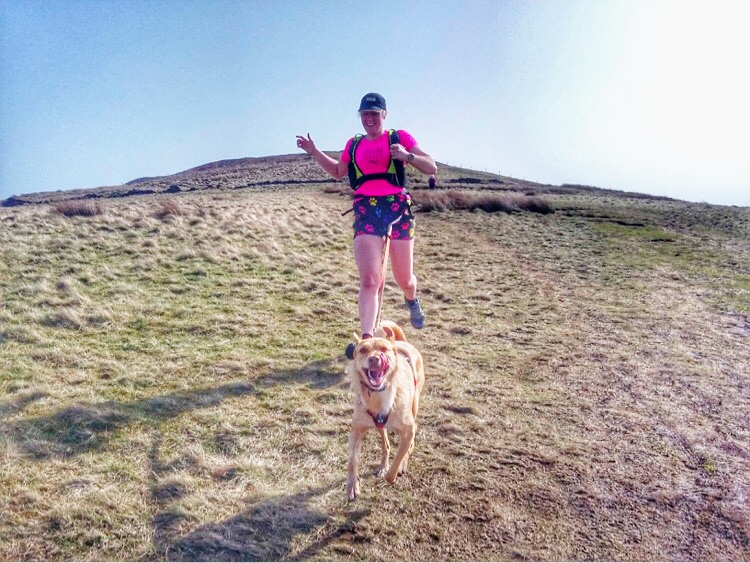
Thank you for listening
We hope you've found lots of tips about getting started with canicross, as well as useful information about running, your dog‘s health and plenty more! We hope you enjoy joining us on the run with your dog. If there is anything you would like to learn more about, please get in touch via our respective websites or social media, or perhaps you would like to be a future guest. We would love to hear from you!
Louise Humphrey teaches both canicross in the Leicester area, and Pilates online.
Michelle Mortimer is a UK Athletics registered Coach in Running Fitness, coaching runners online, and teaches canicross in the West Pennine Moors area to the north of Manchester.
Links to both of our websites are at the top of the page.